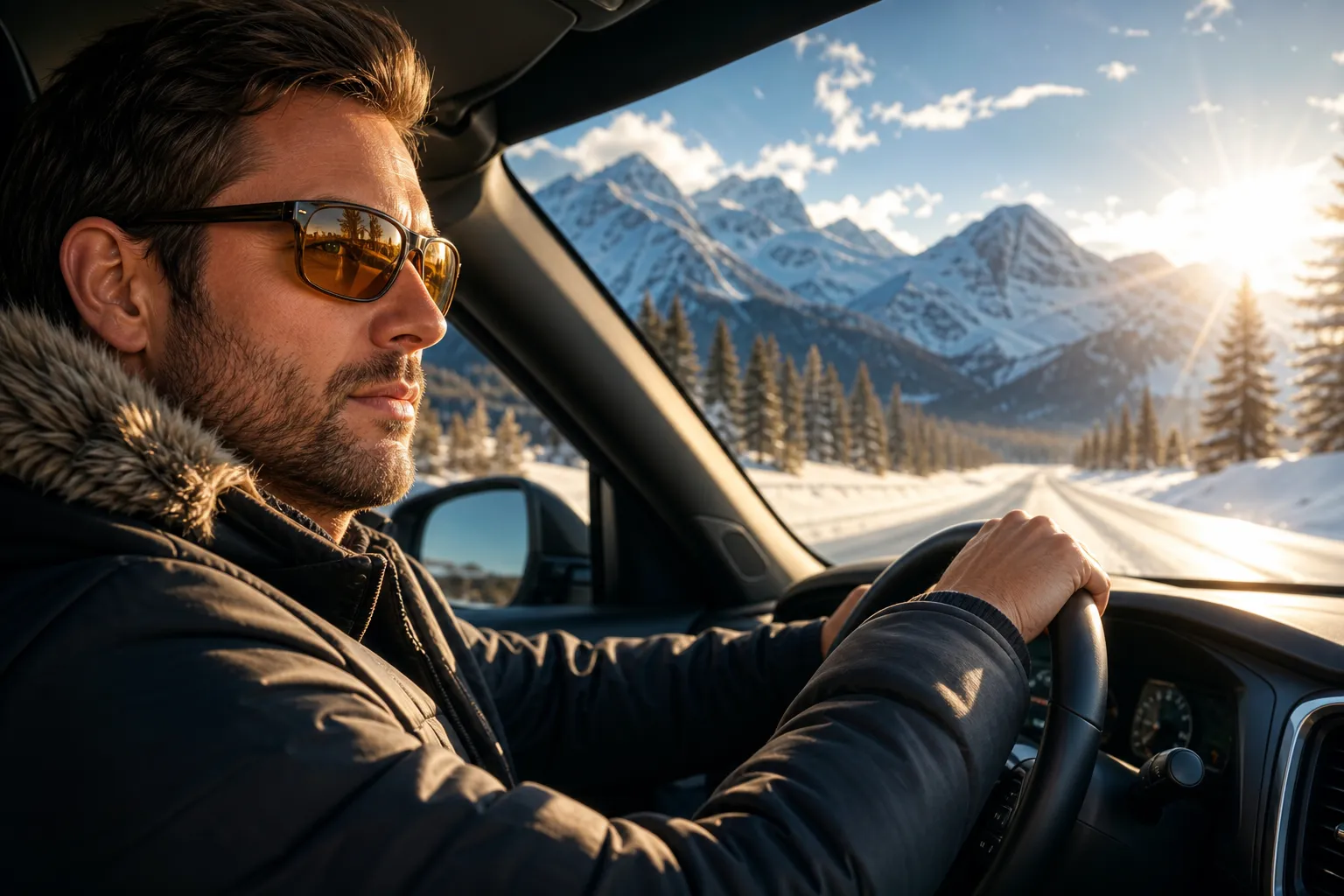
Fresh snow reflects around 80% of incoming sunlight — close to the reflectivity of a polished mirror. On a flat prairie highway in January, that turns the road surface into a blinding white expanse stretching as far as you can see. Many Canadian drivers respond by grabbing whatever dark sunglasses are nearby and calling it handled.
That approach works until you can't distinguish a packed snow surface from the black ice sitting just underneath it.
So what are the best glasses for driving in snow glare in Canada? The answer isn't about finding the darkest pair in the gas station rack. It's about matching the right lens type to the right conditions, understanding where popular options fall short, and knowing which coatings actually do something useful. This article covers all of that — including one approach that works on a fundamentally different principle from conventional filtering.
---
Why Snow Glare Is Harder on Canadian Roads Than Most Drivers Realise
Fresh snow doesn't just reflect a lot of light. On prairie stretches through Alberta and Saskatchewan, there's no tree line to break the exposure. Your eyes are scanning a bright, undifferentiated white surface for kilometres at a stretch, with no contrast and no visual anchor. Prolonged exposure to that kind of intensity doesn't just fatigue your eyes — it can trigger photokeratitis (commonly called snow blindness) and impair the visual clarity you need to react quickly behind the wheel.
The more dangerous problem is what glare hides. Snow and ice patches can look identical under direct glare. Both surfaces reflect intensely; neither shows texture clearly without the right lens. The goal when choosing driving glasses for winter use isn't simply to dim the brightness — it's to dim the brightness while still revealing the texture differences that tell you where traction ends.
---
The Lens Types That Cut Snow Glare — and What Each One Actually Does
Polarized Lenses: The Popular Choice, and Why They Earn It
Polarized lenses filter horizontal light waves — the exact wavelengths that reflect off flat snow and ice. On a clear, sunny winter day on an open Canadian highway, a quality pair of polarized driving glasses delivers a dramatic cut in horizontal glare and a noticeable boost to contrast.
Brown and amber-tinted polarized lenses outperform grey polarized lenses for winter conditions, because the tint boosts depth perception rather than just reducing brightness. If you drive frequently in direct sunlight on open roads, polarized is the right starting point.
Yellow and Amber Contrast Lenses: Underrated for Mixed Conditions
Yellow and amber lenses work by filtering blue wavelengths, which sharpens edges and makes terrain textures stand out. In flat-light conditions — overcast February mornings, heavy snowfall, or the low-angle light of a Canadian winter afternoon — these contrast-enhancing lenses outperform polarized options because they brighten the scene instead of dimming it.
Their visible light transmission typically sits between 50 and 72%, so more light reaches your eyes while the blue haze is removed. On grey days, these are the lenses Canadian drivers should actually be reaching for.
Photochromic Lenses: Built for Canada's Variable Skies
Photochromic lenses darken in bright UV and lighten when the sky goes flat. For Canadian commuters who drive through several distinct light conditions in a single trip, this removes the need to carry two pairs and swap between them.
The one real limitation worth knowing upfront: photochromic lenses slow their transition back to clear in cold temperatures, sometimes taking significantly longer than in warm conditions. Before buying, verify the lens is rated for all-season performance or specifically designed for cold-weather use.
Quantum Hyperlight Optics®: A Different Approach Entirely
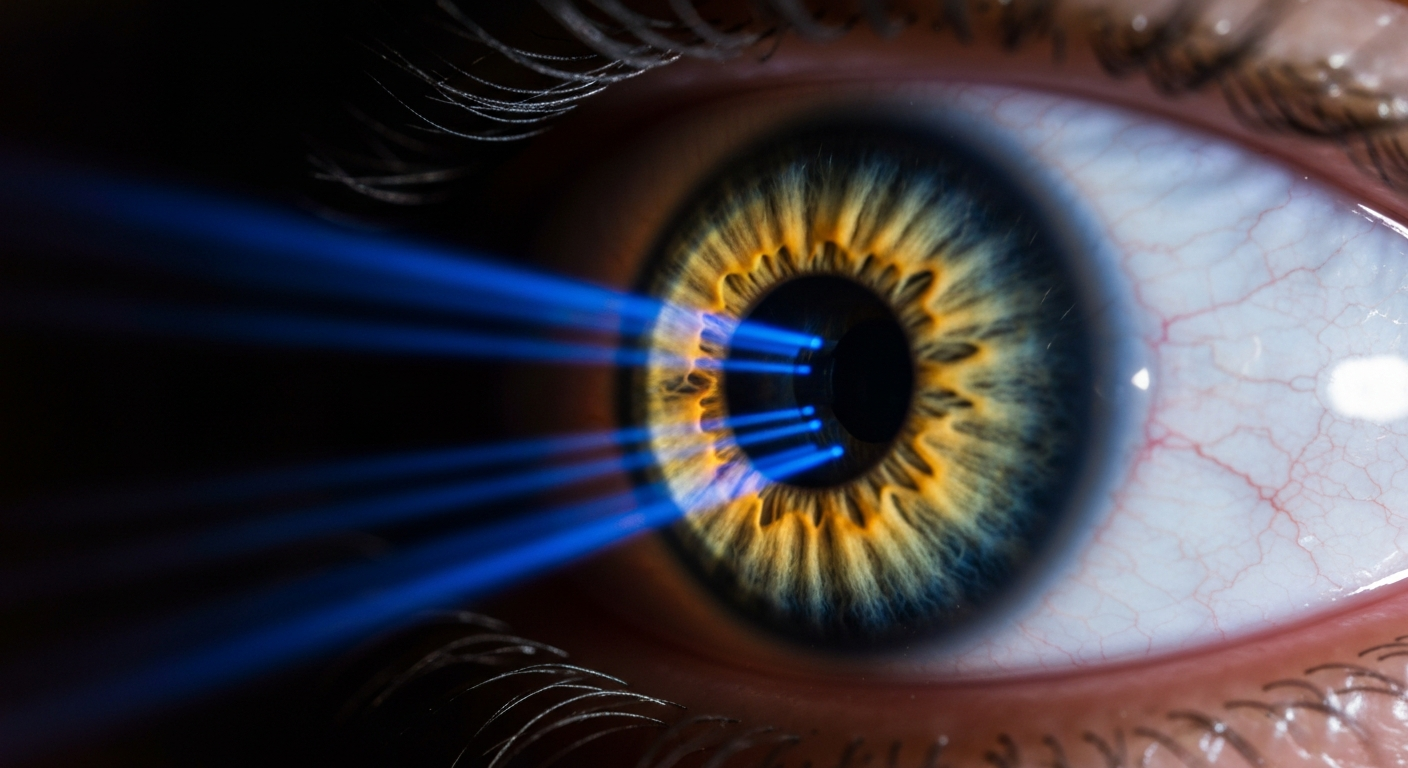
Every lens type covered so far works on the same principle — block or filter certain parts of the light spectrum to reduce what reaches your eye. Tesla Glasses, powered by Quantum Hyperlight Optics®, takes a fundamentally different approach.
The lenses incorporate Fullerene C60 in a proprietary formulation designed to work with the full light spectrum rather than selectively blocking parts of it. Where conventional lenses always involve a trade-off between how much you filter and how much contrast you preserve, the Quantum Hyperlight Optics® design philosophy sidesteps that compromise — delivering light that the visual system finds easier to process without sacrificing the contrast information you need to read a winter road accurately.
For the full technical explanation of how this works, see The Science of Hyperlight Optics.
The Outdoor collection is designed specifically for high-light environments including driving, winter sport, and cycling — with shading levels suited to the intense brightness of Canadian winter conditions. For drivers who want to go deeper on road-specific performance, our article Focus Faster: The Ultimate Eyewear for a Sharper Road Ahead covers what this means in practice behind the wheel.
---
The Polarization Trade-Off Most Retailers Won't Tell You About
Why Polarized Lenses Can Actually Hide Ice Patches
Ice on a road reflects light at specific angles. A polarized lens cuts horizontal glare — and in doing so, it removes the visual cue that tells your brain a surface is slick. On a mixed road where black ice sits beside packed snow, that's a genuine risk that optical safety experts have flagged.
The conventional sales pitch for polarized lenses leaves this part out. Polarized lenses can make an icy surface look like dry pavement if conditions align against you. Knowing when they're the right tool is what separates a smart purchase from an expensive mistake — polarized lenses aren't bad, they're conditional.
When to Reach for Non-Polarized Lenses
Here's the practical decision rule:
- •Open highway, direct sunshine: Polarized amber or brown lenses
- •Overcast, mixed terrain, urban intersections: Yellow or amber non-polarized lenses
- •Night driving: Clear lens with a quality anti-reflective coating — no tint, no exceptions
At night, a tinted or polarized lens reduces the light your eyes need in conditions where you have no reaction time to spare. A clear lens with a quality AR coating is the right tool after dark, full stop.
---
Coatings That Make a Real Difference in Canadian Winter Conditions
Anti-Reflective Coating: The Upgrade That Actually Matters
Anti-reflective coating reduces halo effects around oncoming headlights and minimises internal reflections bouncing around inside the lens. For Canadian drivers navigating low-light conditions from October through March, this coating is often more impactful than tint selection alone — particularly for night and dusk driving.
A clear lens with a quality AR coating delivers cleaner, sharper images of what's ahead by reducing headlight scatter. It won't draw attention. It will work every time.
Hydrophobic and Anti-Fog Coatings for Cold-Weather Transitions
Fogging happens the moment you step from a warm car into cold air, or enter a warm vehicle after standing outside. A hydrophobic coating causes moisture to bead off the lens surface rather than condensing into a film. For Canadian drivers who park outdoors, this removes a daily frustration rather than solving an occasional inconvenience.
Anti-scratch protection is typically bundled into premium hydrophobic coatings — worth confirming before purchase, since snow and road grit are hard on lens surfaces across a full Canadian winter.
---
How to Choose the Best Glasses for Driving in Snow Glare in Canada
Match the Lens to the Condition, Not the Season
No single pair covers every Canadian driving scenario. The practical framework:
- •Bright direct sun on open roads: Polarized amber or brown lenses
- •Overcast commutes and grey winter days: Yellow or amber non-polarized lenses
- •Night driving: Clear lenses with a quality AR coating
- •Variable day trips across all three conditions: Photochromic lens rated for cold weather, or the Tesla Glasses Hybrid collection for indoor-outdoor transitions throughout the day
Two purpose-built pairs often outperform one pair trying to do everything — and that's a recommendation consistent with how driving safety experts approach condition-specific eyewear. If you're unsure which lens profile fits your driving patterns, the Tesla Glasses lens selector on our website walks you through your specific conditions to match you with the right option.
For drivers who also split time between indoor and outdoor environments beyond the car, see our related guide Best Glasses If You Work Both Indoors and Outdoors in Canada.
---
Frequently Asked Questions
What are the best glasses for driving in snow glare in Canada?
It depends on your conditions. For bright sun on open highways, polarized amber or brown lenses are the strongest choice. For overcast days and mixed terrain, yellow or amber non-polarized lenses enhance contrast better. For drivers who want a single pair that handles variable Canadian light without the UV dependency of photochromic lenses, the Tesla Glasses Outdoor collection with Quantum Hyperlight Optics® is worth considering.
Are polarized lenses safe for driving on icy Canadian roads?
Polarized lenses are excellent for cutting glare on open sunny roads but carry a real trade-off on icy surfaces — they can reduce the visual contrast that distinguishes ice from packed snow. On mixed urban roads or anywhere black ice is a risk, a non-polarized amber or yellow lens is the safer choice.
Do Tesla Glasses work for night driving in Canada?
The Tesla Glasses clear lens with anti-reflective coating is the recommended option for night driving. Tinted lenses — including the Outdoor collection — are designed for daytime use in bright conditions and should not be used after dark.
Can I wear Tesla Glasses in both my car and outdoors in winter?
Yes. The Outdoor collection is designed for high-light environments including driving and outdoor winter activity. The Hybrid collection is specifically suited to workers and drivers who move between indoor and outdoor environments throughout the day — with no UV dependency and no transition lag in cold temperatures. See Best Glasses If You Work Both Indoors and Outdoors in Canada for more detail.
Does Tesla Glasses ship to Canada?
Yes. Check the Tesla Glasses website directly for current shipping options, delivery timeframes, and pricing for Canadian orders.
Are Tesla Glasses suitable for cataract patients who drive in winter?
Yes — see our article Why Cataract Patients Should Wear Tesla Glasses for specific guidance on lens selection for post-cataract driving in variable Canadian light conditions.