Why Crossing the Threshold Is Harder on Your Eyes Than It Looks
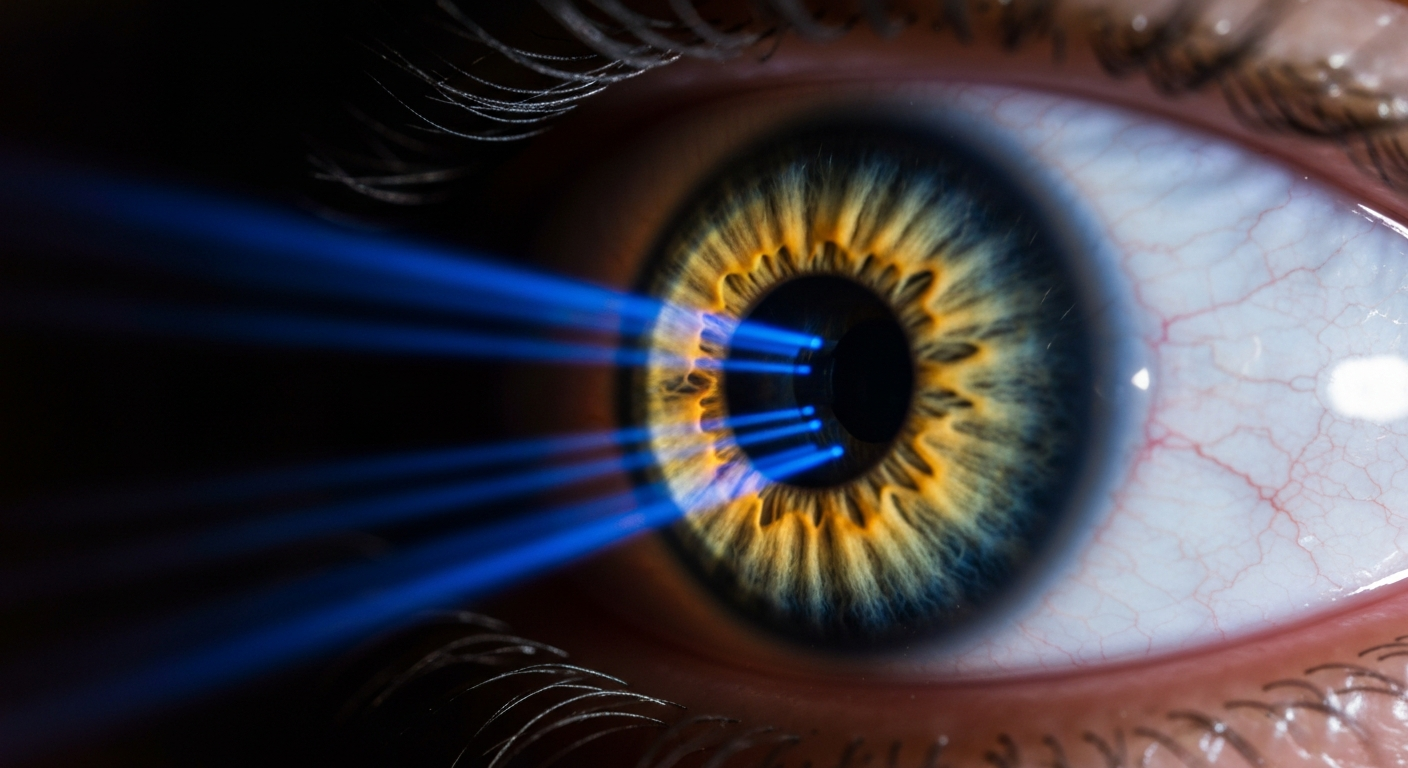
The gap between fluorescent office lighting and full outdoor sunshine isn't just a comfort issue — it's a real physiological demand on your visual system. Indoor environments typically sit around 300–500 lux under fluorescent or LED lighting. Step outside on a clear Canadian winter day with snow on the ground and that number can spike past 100,000 lux — a difference of roughly 200 times. Standard clear lenses do nothing to buffer that shift. Standard sunglasses leave you fumbling when you step back inside.
Repeated light transitions without adequate eye support cause more than squinting. Cumulative visual stress during the workday — especially under high-glare outdoor conditions followed by screen time indoors — contributes to headaches, eye fatigue, and reduced afternoon focus. Anyone putting in a full shift across both environments in Canada will likely feel this by mid-afternoon, and more so in winter when the contrast between dim indoor workspaces and brilliant snow-reflected light is at its most extreme.
Key Lens Types for Indoor-Outdoor Work
Not all adaptive lenses work the same way, and the differences matter depending on your specific work rhythm.
Photochromic (Transition) Lenses: Convenient, But With Real Limits
Photochromic lenses darken outdoors and clear indoors automatically, making them the most common recommendation for indoor-outdoor workers. The convenience is real: one pair handles most conditions without any manual swap.
The limitations are equally real — and particularly relevant in Canada. Transition times run 2–5 minutes, which is genuinely disruptive in fast-paced work environments. Cold winters slow the photochromic reaction significantly; in sub-zero temperatures, lenses that darken in seconds during summer may take several minutes to respond. Inside a vehicle cab or glazed site office, windshields block the UV trigger, so lenses often stay clear when you need shade most. For workers who drive between sites, this is a consistent frustration, not an occasional one.
For a practical comparison of how tinted and photochromic lenses perform across varied conditions, see our post What Lenses Should You Choose? Indoor, Outdoor or Hybrid?.
Polarized and Tinted Lenses: Powerful Outdoors, Limited Inside
Polarized lenses cut horizontal glare from snow, pavement, and water better than photochromic options, making them excellent for outdoor-heavy Canadian work — particularly in winter when snow glare is intense. Gray and green tints perform best for maintaining true colour outdoors while reducing eye strain.
The trade-off is hard to get around: fixed-tint polarized lenses stay dark indoors, making close tasks and screen work uncomfortable. They can also interact with LCD screens, causing distortion or making displays appear dark at certain angles. Polarized options suit workers whose day is predominantly outdoor with limited indoor close-up work. For a balanced indoor-outdoor schedule, they create as many problems as they solve.
Hybrid-Spectrum Lenses: Bridging the Gap Without the Wait
A different approach to the indoor-outdoor problem comes from Fullerene C60 nanotechnology — the lens science at the core of the Tesla Glasses Hybrid collection.
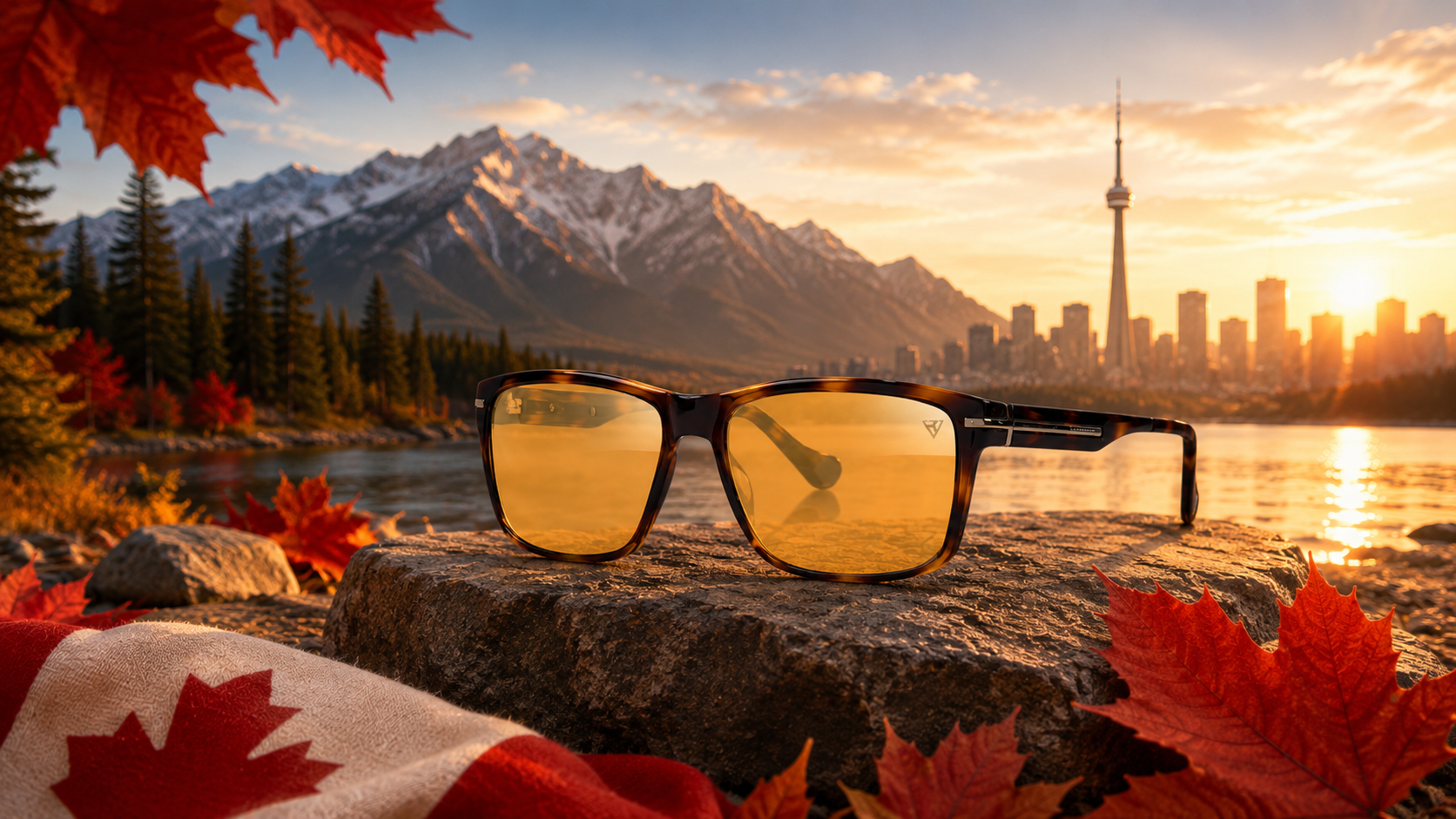
Rather than relying on a photochromic chemical reaction triggered by UV light, these lenses use a fixed shading level combined with an anti-reflective coating to manage spectral output across varied lighting environments. The lens incorporates 55% Fullerene shading — achieved through the nanotechnology layer — which delivers consistent visual clarity whether you're under office fluorescents or stepping out into Canadian winter brightness.
The anti-reflective coating handles indoor glare from overhead lighting and screens, while the fixed shading level manages outdoor brightness without blocking too much light when you step back inside. Critically, there's no transition lag and no UV dependency — which means the lens performs identically in a cold Saskatchewan morning as it does in a mild Vancouver afternoon.
For workers who need one pair that doesn't ask them to wait or swap, this is a fundamentally different category of solution. Learn more about how the Hybrid lens compares to other options in our post What Lenses Should You Choose? Indoor, Outdoor or Hybrid?.
Coatings That Make a Real Difference
The lens type gets most of the attention. Coatings are where most buyers leave value on the table.
Anti-Fog Coatings for Canadian Conditions
Anti-fog coatings matter most for workers moving from cold outdoor air into warm indoor spaces — a daily reality across most of Canada from October through April. Factory-applied hydrophilic anti-fog treatments, integrated into the lens during manufacturing, significantly outperform spray-on alternatives under active conditions. Spray-on solutions wear off quickly and aren't a reliable long-term fix for a full working season.
Anti-Reflective Coatings for Indoor Clarity
Anti-reflective coatings reduce glare from overhead lighting and screens indoors — environments where uncoated lenses create distracting surface reflections during detail work. Unlike outdoor glare, indoor fluorescent and LED glare comes from the lens surface itself. AR coatings eliminate it by preventing reflections rather than filtering incoming light, which is why they're a standard feature across the Tesla Glasses range.
One Pair or Two: The Honest Trade-Off for Your Work Type
The instinct to solve everything with a single pair is understandable. The answer depends on your actual work pattern.
One adaptive pair works best when:
- •Your indoor and outdoor time is roughly balanced throughout the day
- •Quick transitions are constant, making swapping impractical
- •You need a lens that performs without UV dependence (critical in Canadian winter conditions)
This is the use case the Tesla Glasses Hybrid collection is built for: workers who move between a site office and outdoor conditions repeatedly across the day, without time to pause and switch eyewear.
Dedicated pairs make more sense when:
- •Outdoor time is intense — full-day outdoor labour, high-altitude work, or prolonged exposure on open sites
- •Indoor tasks involve precision close work where even moderate fixed tinting creates problems
- •Your work involves driving as a primary activity
For driving-specific considerations — including how to handle low winter sun and snow glare on Canadian roads — our article Focus Faster: The Ultimate Eyewear for a Sharper Road Ahead covers the key factors for vehicle operators.
Frame Features That Matter for an Active Shift
The right lens in the wrong frame is a liability. For active outdoor work especially, frame design is a safety and comfort issue.
Wraparound frames provide peripheral coverage that flat frames can't match — relevant when debris or wind comes from the side on Canadian worksites. For workers who move, crouch, or lift regularly, rubberised temple tips and retention straps prevent the constant readjustment that flat temple arms require. Silicone or rubberised nose pads keep glasses stable during perspiration or heavy movement.
Weight matters more than most buyers realise. A frame that feels fine in-store becomes noticeable after six hours on the job. Polycarbonate and TR-90 nylon frames offer the best combination of lightweight flexibility and durability for active work in varied conditions.
A Short Decision Checklist Before You Purchase
Use this to make a decision based on your actual work pattern, not marketing language.
Predominantly indoors with moderate outdoor transitions:
Anti-reflective coating, light-to-moderate tint or Hybrid lens with fixed shading, comfortable all-day frame fit.
Balanced indoor-outdoor split (the most common Canadian work pattern):
Single versatile pair with Fullerene-based Hybrid lens, anti-reflective and anti-fog coatings, wraparound fit if active. The Tesla Glasses Hybrid collection is built specifically for this profile.
Predominantly outdoors with intense sun or snow exposure:
Polarized gray or green tint, retention strap, full UV protection rating.
Driving in variable Canadian conditions (snow glare, low winter sun):
Polarized lens, gray or copper tint, anti-reflective rear coating to reduce internal dashboard reflections. See our driving eyewear guide for more detail.
The Right Pair Is the One That Disappears Into Your Day
Knowing which glasses are best for working inside and outside in Canada comes down to a clear framework rather than a single universal answer. Lens type, coatings, and frame fit each play a specific role — and understanding that role puts you in a position to buy intentionally rather than reactively.
For most Canadian workers crossing the indoor-outdoor threshold repeatedly throughout the day, the goal isn't the most technically complex lens. It's the most consistently comfortable one across a full Canadian season.
Whether that's a well-specified photochromic lens, a polarized pair for outdoor-heavy work, or a Tesla Glasses Hybrid lens that handles both environments without the lag, the transition wait, or the UV dependency — the right pair is the one that stops pulling your attention from the work.
If you're unsure which option fits your routine, Tesla Glasses offers a lens selector on our site to help match lens type to your lifestyle. For a broader look at the full range, visit Articles & Insights.