The Scale of the Problem
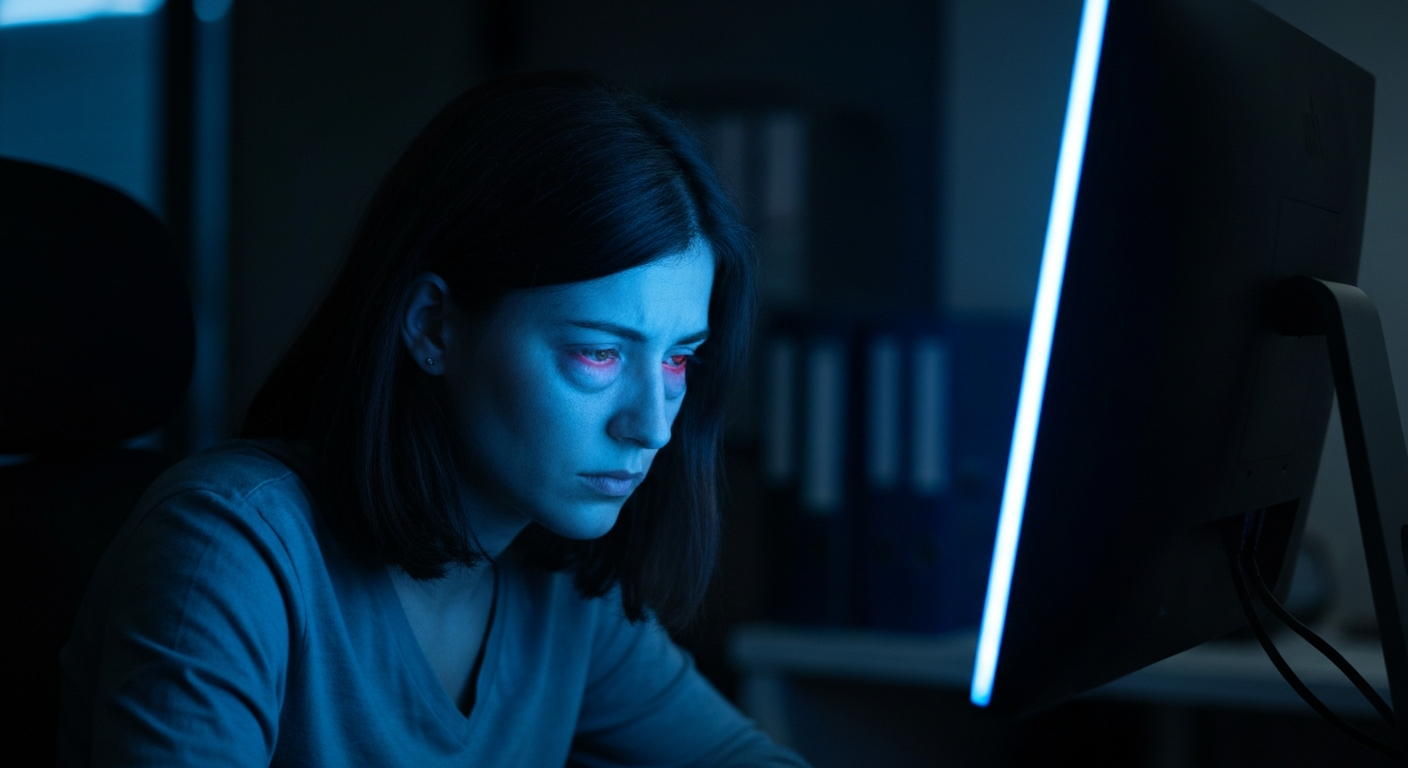
Digital eye strain — also known as computer vision syndrome — is now one of the most common occupational health complaints globally. Studies suggest that more than 60% of people who regularly use digital devices experience symptoms, ranging from mild discomfort to debilitating headaches and blurred vision.
Yet most advice on this topic is incomplete. "Take breaks" and "blink more" are not wrong, but they do not address the root causes.
What Is Actually Happening
1. High-Energy Blue Light Scatter
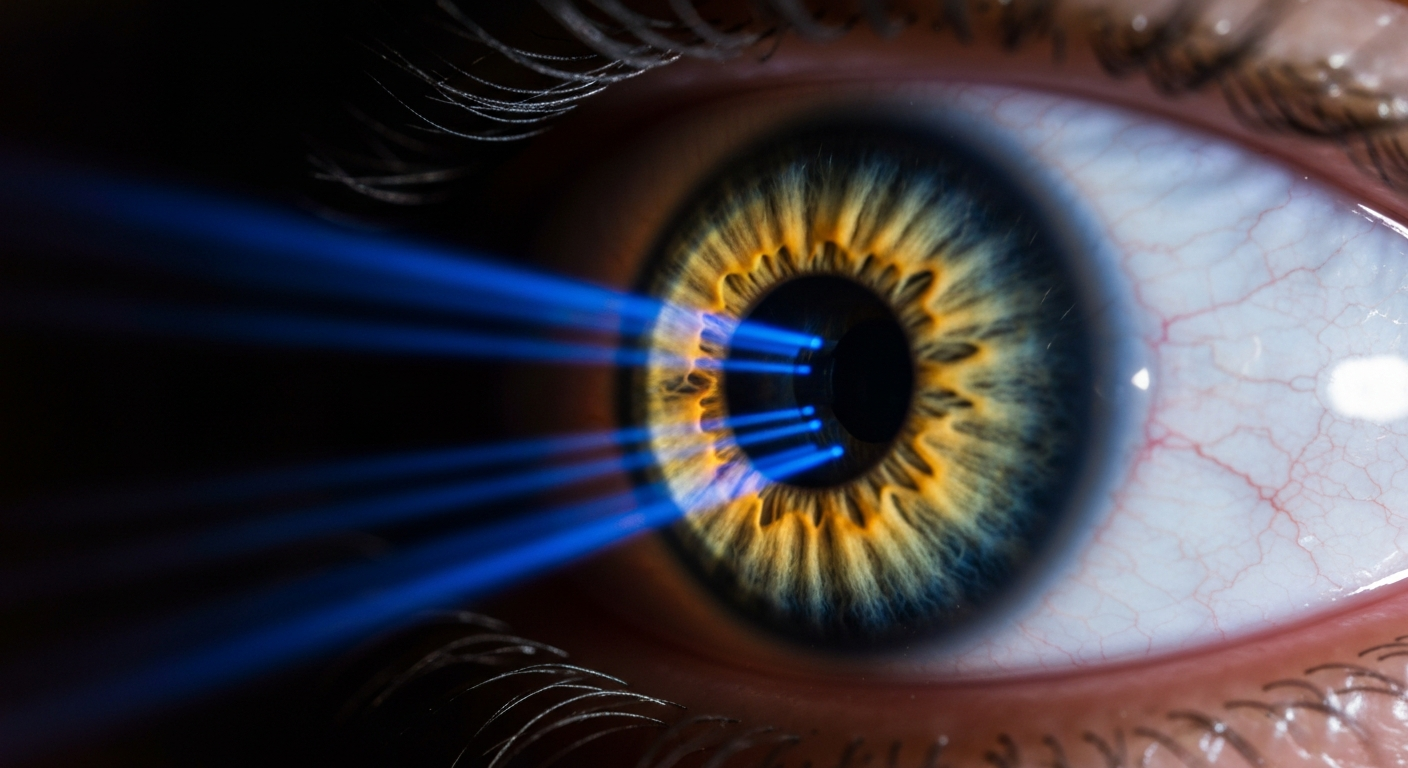
Short-wavelength blue light (400–450nm) has the highest energy of any visible light wavelength. Because of its high energy, it scatters more readily inside the eye than longer wavelengths. This scattering reduces contrast and forces the visual system to work harder to resolve a sharp image — causing the sustained muscular effort we experience as eye strain.
2. Flicker
Modern LED-backlit screens flicker at rates that are imperceptible to conscious awareness but are detected by the visual system. This creates a constant low-level stress signal that accumulates over hours of exposure.
3. Reduced Blink Rate
The average blink rate drops from 15–20 times per minute during conversation to 5–7 times per minute during screen use. Each blink refreshes the tear film that protects and lubricates the corneal surface. Less blinking means greater dryness, which causes burning and irritation that is often attributed to "screen radiation."
4. Accommodative Stress
The lens of the eye must constantly adjust focus when working at close distances. This process — called accommodation — is managed by the ciliary muscle. Sustained near-focus for hours without relief leads to ciliary spasm, contributing to headaches and blurred vision after screen sessions.
Why Standard Blue Light Glasses Fall Short
Most blue light glasses simply apply a yellow tint that filters out some short-wavelength light. This reduces scatter to a degree, but it does not address flicker, it does not improve the spectral coherence of the light reaching your retina, and it often distorts colour perception.
Tesla Hyperlight lenses take a different approach. Rather than filtering light, the Fullerene C60 coating restructures the light spectrum — organising it into a harmonised, coherent format that reduces scatter, decreases the stress signal to the visual cortex, and requires less effort from the accommodation system.
What You Can Do
- •Use Tesla Indoor Glasses during all extended screen sessions
- •Follow the 20-20-20 rule: every 20 minutes, look at something 20 feet away for 20 seconds
- •Ensure your screen is at arm's length and slightly below eye level
- •Increase ambient room lighting to reduce contrast between the screen and surroundings
Screen fatigue is not inevitable. With the right light environment and the right optical support, most people notice significant improvement within days.